Tuesday, 14 October 2008

Film- Faceless and Red Road

Faceless
A film produced under the rules of the ‘Manifesto for CCTV Filmmakers’. The film had RealTime orients of the life of every person in the shoot. All the faces were covered by black coloured circles/squares. The making of the film was held in UK as there are 20% of the world’s cameras in UK. The film took 5 yrs to complete and about 200 letters to councils and undergrounds stations. Anyone in that film could ask for the copy of the footage. The number of camera is likely to double up in next a few years which meant you would be seen at footage no matter where you went.


http://seandodson.files.wordpress.com/2008/04/faceless.jpg


CCTV for film makers

Film makers are using CCTV camera to make their low cost films. So this means a film does not require special camera or a camera man to take the shoot. Depending on the angle of the camera the whole scene would be shot and later edited with the requirements. UK having 4.2 million cameras means 1 camera for every 14 people.
British director of CCTV movie Red Road has said the 24 hour of surveillance is good for security but needs to be debated.

Movie- Red Road
Andrea Arnold directed the film which was release on the 27th October in 2006. The genre of the film was drama, stalker, security system and thriller.
The film was based on a lady worker who watches over an area through CCTV camera.


http://images.rottentomatoes.com/images/movie/gallery/1172526/photo_02.jpg


The CCTV is everywhere and someone is watching every act of ours. Who knows who is watching? The cameras have incredible zoom system, clear vision and colour footage.

Wednesday, 8 October 2008

Special Effects

How are the special effects created in movie like Matrix where the camera rotates around a frozen image?

In Matrix not only the camera is rotating but the actor is also moving in slow motion during the rotation of the camera. There are various possibilities how such an effect can be created, some are the possibilities are as following:

1. A number of still cameras capture the scene, every camera taking a picture one after another rather than all cameras taking picture at the same time. (Eadweard Muybridge’s Technique)

2. Use software/programmes to show the slow motion after shooting the scene.

3. Manipulate the shot scene with computer generated backgrounds.

4. Design a 3D computer model and then do the editing of the backgrounds and rotation.

5. The actor is wearing a wire which is attached to the ceiling, so the actor can only fall forward or backwards.

The Matrix - Bullet Time walkthrough

http://uk.youtube.com/watch?v=cZh787eKeEw


Bullet Time Effect – Unleashed

http://uk.youtube.com/watch?v=pYOdkWLfypU&NR=1

Monday, 6 October 2008

Art Vs Technology

Art= Mostly refers to the visual arts, such as sculpture, painting, sketches etc

Technology= Science. It may refer to the objects such as machines, hardware, systems etc

I think Art is based on emotions, how we feel about the concept, the outcome, the colours and the shapes, whereas technology is about the machines, tools and systems and none of them require emotions they require technical substance such as codes (Personal Opinion).

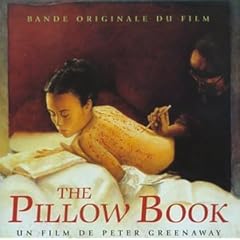
Film- Pillow Book

The film is by Peter Greenaway who is the director, book by Sei Shonagon and written by Peter Greenaway. The film which released on 08 November 1996 in UK was based on Drama, Romance, Nudity, Art, Fashion, Surrealism, Diary and Writing on the Body.

The film was about a young girl in Japan, whose father used to paint characters on her face and her aunt would read them out to her. The girl Nagiko grows up to be obsessed with writing on bodies, paper, books and having people writing on her.

The effects used in the film were very interesting and engaging. A scene would blend into another. Text would go around the screen every time a scene changed. The story was very fast and artistic in a sense that, the way the girl changed her mind about writing on people rather than having people to write on her body.


http://ecx.images-amazon.com/images/I/417KC3FCDXL._SL500_AA240_.jpg


http://www.axelmusic.com/resources/covers/back/043396287099.jpg

Web links to some mature sites:
http://www.destricted.com/
http://www.single-shot.co.uk/

Sunday, 5 October 2008

Otomo’s Akira

Twenty Years ago Katsuhiro Otomo’s Akira changed the perception of Japanese animation of the West’s.

It is said that Matrix was an inspiration of Akira. Quote from Empire Magazine: “No Akira, No Matrix. It’s that important”.

Akira project was based on 30 years from 2019, in which Tokyo was destroyed in World War III. The government captures a guy to do some tests on him, which gives him new powers.


http://uk.youtube.com/watch?v=nUziEwTCA3U&feature=related

http://uk.youtube.com/watch?v=qT_SLtKoeVY

Thursday, 2 October 2008

First Film

What was the First film called and how long was it?

The Lumiere Brother’s were one of the first ones to step into film world. They shot there first film using their own created combo movie camera and a projector. They used 35mm width of a film and a speed of 16 frames per second. Their first film was based on factory worker going to home after work on 22, March 1895.

Some of the films which were showing in 1895 are as following:

1. La Sortie des Ouviers de L'Usine Lumière à Lyon (1895) (Workers Leaving the Lumiere Factory) (46 seconds)

2. La Voltige (1895) (Horse Trick Riders) (46 seconds)

3. La Pêche aux Poissons Rouges (1895) (Fishing for Goldfish) (42 seconds)

4. Le Débarquement du Congrès de Photographie à Lyon (1895) (The Disembarkment of the Congress of Photographers in Lyon) (48 seconds)

5. Les Forgerons (1895) (Blacksmiths) (49 seconds)

6. Le Jardinier (l'Arroseur Arrosé) (The Gardener or The Sprinkler Sprinkled) (1895) (49 seconds)

7. Le Repas (de Bébé) (1895) (Baby's Meal) (41 seconds)

8. Le Saut à la Couverture (1895) (Jumping onto the Blanket) (41 seconds)

9. La Place des Cordeliers à Lyon (1895) (Cordeliers Square in Lyon) (44 seconds)

10. La Mer (Baignade en Mer) (1895) (Bathing in the Sea) (38 seconds)
The first feature length film was made in 1906 by Charles Tait, an Australian director and writer. The film lasted for 60-70 minutes. ‘The Story of the Kelly Gang’.

Films were made by the speed of 24 frames per second by the late 1920s.

Wednesday, 1 October 2008

Time Based Imaging

The module is based on moving images turned into a video. The module having three assignments, the first one is based on a 30sec video. The assignment requires the concept of Jim Campbell.


http://www.computergraphica.com/_sys/images/formula-for-computer-art.jpg

Input= ideas/theme/concept
Program= manipulation
Output=Final production

Looking into the history of video production which started off with Eadweard J.Muybridge (09 April 1830 – 08 May 1904). Eadweard was a photographer who was known for his multiple uses of cameras to capture motion.

In 1872 a businessman and a race-horse owner of California questioned: whether all four of a horse’s hooves left the ground at the same time during a gallop. Muybridge decided to answer the question scientifically.

In 1877 Muybridge photographed a horse running using a series of twenty-four cameras. He used a series of 12 stereoscopic cameras, 21 inches apart to cover the distance of 20 feet. Other 12 cameras were arranged parallel to the track. Pictures were taken at one thousandth of a second. A trip wire was attached to each camera shutter which was triggered by the horse’s hooves.


http://www.maritimeheritage.org/vips/images/muybridgeHorse.jpg

The series of photos are now known as ‘The Horse in Motion’.