Tuesday, 18 November 2008

Exhibitions

I spend the day in Central London visiting a few places.

1. The Curve – Barbican

The curve was purely and interactive project. The curve was based on several projections and all of them had sets of speaker which were playing different radio stations. As soon as one would walk in front of the screen the system could define the figure and draw a red line around the shadow of one on the screen. Depending on how close one was to the screen or walking in a direction left to right/ right to left, the radio stations changed. Several people could walk into one screen but then I don’t know how that would work as there weren’t many people around for me to see how the radio stations would crash into each other all at the same time.

2. Under Scan – Trafalgar Square


Because I went to Trafalgar Square around 4-5pm so I didn’t get a very good video of the work that was displaying there. As there was still some sunlight around, and the work was based on projections on the ground, the movement in the video can’t be seen properly. I personally feel that the projection is of a saved film/ clip that keep on repeating rather than it being interactive with the movement around cause by humans walking on the ground.

Rafael Lozano-Hemmer - Haunch of Venison London

3. Rafael Lozano-Hemmer - Haunch of Venison London


The gallery only exhibiting 7 pieces of work held a very attractive interactive art work. It was based on light and sound. You would say a word into a telecom and lights would turn on and go round in their designed shape and then you would hear the word back but with a different pitch of volume.
It was called ‘Less Than Three’ and described as LED strips, 2 intercoms, computer dimming racks.


Pulse Tank


This was a tank that contained water in a dark room described as Ripple tank, heart rate sensors, solenoids, computer, spotlight, custom software and hardware, pump and chlorine.
The tank hand sensors around it which detected the heart beat rate and made ripples in water according to it.


4. Lisson Gallery – Edgeware Road.
The Gallery was under maintenance so I couldn’t have a look at the work the gallery was holding.

Friday, 14 November 2008

Essay

Essay for Time Based Imaging

“Never mistake motion for action.”-Ernest Hemingway Quotes

The concept of the Video is to show Light and Motion/Movement.

Technology: I used a Nikon 10 megapixel camera to take pictures as well as to make the videos.
Technique: Long exposure pictures. Long exposure photography is a technique that requires a slow shutter speed for the camera to capture light and movement.

Long exposure photographs are easier to achieve in low-light conditions, but can be done in brighter light using neutral density filters or specially designed cameras.

When the shutter is open for long time, say for more than a half of second it is considered to be a long exposure.

The thought is to detain the movement and express this movement in the photograph. There are two ways of achieving the effect. First is that the camera stays still and the subject is moving or that the subject stays still and the camera moves.

To get the best out of photographs I would prefer a bright/shiny subject/s (or highly reflective), darker background with many bright spots. By doing this, I will achieve a greater distinction between the background and the subject, and the bright lights will create the interesting patterns.

How does the flash work in long exposure photographs?

“Focal plane shutters (common on SLR cameras) consist of two "curtains", usually made of rubberized cloth (in old film cameras) or very thin metal. The first curtain (which I will call the "leading" curtain) normally covers the film or sensor, hiding it from the light coming through the lens. When you take a photo, the leading curtain moves across the film/sensor to expose it to the light. After the leading curtain has moved, another curtain (which I will call the "trailing" curtain) starts to move, again covering the film/sensor to hide the light from it” -Skip Douglas= http://photo.net/canon-eos-digital-camera-forum/00FZNZ


http://tips.romanzolin.com/articles/article054.php

First Curtain
When the camera is set to match the flash and shutter at first curtain, shutter opens and at the same time as the flash fires. Because the flash only fires for a short period of time, the flash light time doesn't overlap with the exposure time – it's a lot shorter. Only the first few fractions of a second the scene is lit by the flash. This is shown by the thick red line in the start of the exposure time.

Second Curtain
The second curtain takes place at the end of the exposure time. Flash fires; the scene is lit for a few fractions of a second, shutter closes. And this is shown by the thick yellow line.

Artists

Photographer Alexey Titarenko has done similar work. Alexey used a mishmash series of long exposure photos. As seen in the photograph below, the merging of the photos can be noticeable by looking at the trainer, at the bottom of the image.


http://www.alexeytitarenko.com/


Brassai is a French photographer, filmmaker and a sculptor. Brassai is a night time photographer. I think the last picture of his, on this page shows the long exposure effect. Here are thereof his pictures:

Object of the picture (car) is not moving but the engine is on. The photographer has used a tripod for this picture as the image is not out of focus and everything is in its position. No sense of motion can be seen in the picture but it can possibly be a long exposure photograph, as the picture is taken during the night.

This picture is a reflection of a bridge in water. The picture is blurry, the reason to that can be not using a tripod. The picture has a link to light and reflection, not movement. Motion is a sense that the camera wasn’t kept in still position while the shutter was open.


This picture is taken from very far from the actual place which makes me think that it is a long exposure photograph, as the light in the picture is not clear and the road seems empty but sense of rush can be felt by looking at it.

My inspiration
http://abduzeedo.com/awesome-light-graffiti-pictures has amazing work. Some photographs of their work are below:

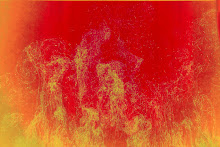
This pictures looks like graffiti work. Tones of secondary colours can be seen in this picture, Orange and Blue.
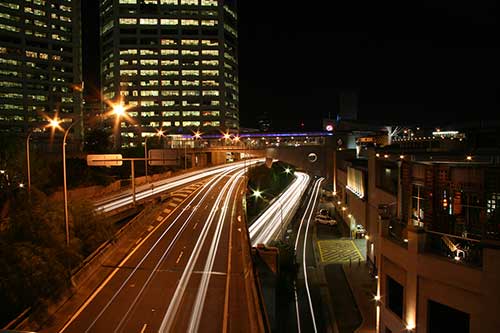
This picture is taken under a bridge. The reflection of the building can be seen in water whereas; the red light is giving the effect of tyres on the road.
For some reason this picture reminds me of Casper ghost cartoons.

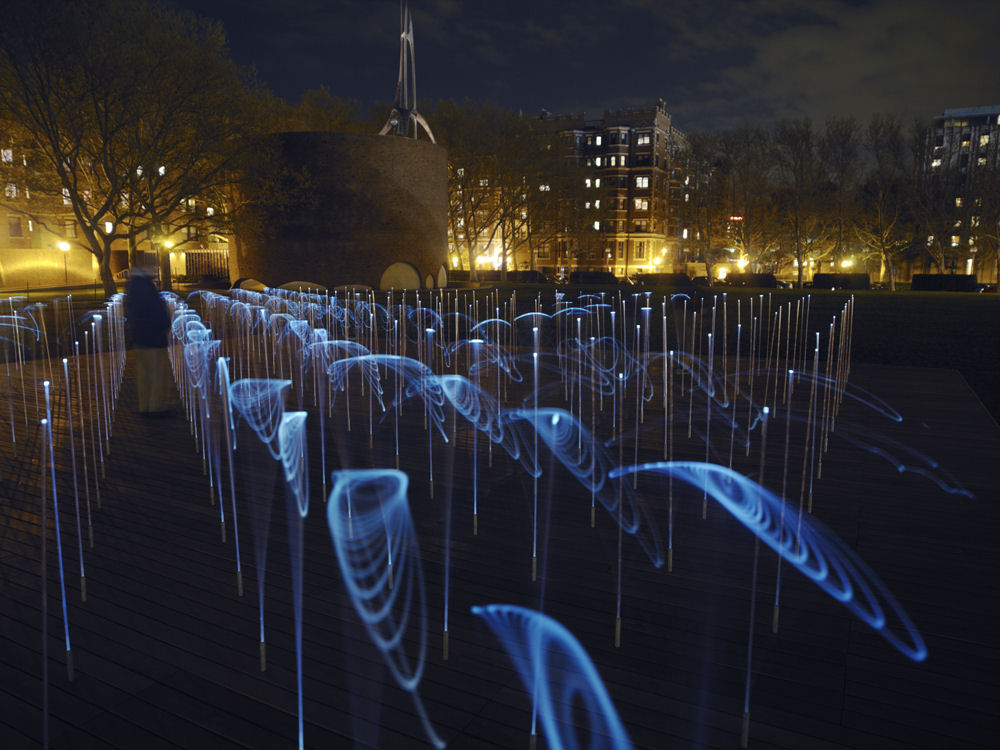
A huge difference in the colours, showing the exact positioning of the light and the direction it was moved while the shutter was open.

This picture has a smoky effect.

As seen in all the pictures the background is dark which is making the light obvious and clear.
The essential difference between emotion and reason is that emotion leads to action while reason leads to conclusions.”- Donald Calne Quote.

For my video I used CyberLink PowerDirector (program) to manipulate and merge the pictures to make them present as one. I added a few picture towards the video and used Film Clip 1 as transitions to play the images with Text Blur as an effect to show the text on top of the playing video of pictures. To make the picture flow smoothly I added a track to it, which is an instrumental piece of music.

Overall, I think I’m going to base my final video on Long Exposure technique but there are possibilities that I may change the way to present Light and Motion.

Bibliography

My inspiration
http://abduzeedo.com/awesome-light-graffiti-pictures

Donald Calne Quotes
http://philosophersnotes.com/quotes/by_topic/Motion?page=2

Music to the Video is form http://www.cooltoad.com/
Song title = remix-shakethebass.mp3

Concept Video

Friday, 7 November 2008

Pictures

Pictures that I took by London Bridge station:


I moved my camera a lot while taking these pictures because I think they work better. They show movement and light together rather than the pictures below

Thursday, 6 November 2008

Theme

Theme for my Video is Light and Movement and I have been looking over the internet for some ideas. Here are some of the pictures I came across:


http://farm3.static.flickr.com/2009/1800045504_47183a6a3a_o.jpg


http://www.loop.ph/twiki/pub/Loop/TemporalLight/LoopTemporalLight.jpg

Theme for my Video is Light and Movement and I have been looking over the internet for some ideas.

Tuesday, 4 November 2008

Duchamp and Vito Acconci

Duchamp

Duchamp believed in the artistic processed and art marketing rather than in theories of explaining an action.
The image shows movement with time. Long Exposure technique is likely to be used for this type of picture or set of pictures have been put together and edited.

Vito Acconci
Acconci used his own body as a subject to perform in videos, films and photography.

I was inspired by his work “City of words”.

Sunday, 2 November 2008

Stop Motion Animation

Stop Motion videos by http://stopmotionanimation.com/gallery/
Paper Tree


http://uk.youtube.com/watch?v=LbHxWCN99lQ&eurl=http://stopmotionanimation.com/gallery/
Paper tree the title of the video is based on a Tree of paper and clay. One minute long video is very fast and interesting. The clay images kiss and become one in front of the tree and fade into it. The theme was kiss and fusion. The maker used Premiere for editing the video.

My favourite stop motion form http://stopmotionanimation.com/gallery/ site is called WORKU#1- Stop motion animation.


http://uk.youtube.com/watch?v=NFnobnRsEv0&eurl=http://stopmotionanimation.com/gallery/
The story to my understanding is about a person who finds a world inside a dessert. The way the people live, work and eat of that world, is show in the video. Eventually he gets kicked out of that world and back into the dessert.

Saturday, 1 November 2008

Stop Motion

Before I can start on making my own video I looked at some videos made by various people over the internet which gave me a handful of ideas.

The video is divided into four sections; every section is labelled after a city, London, Paris, Boston and New York. Every city has its own video, so four videos can be played at a time.

Every city has its own video, four video playing at the same time from four different parts of the world.

Tuesday, 14 October 2008

Film- Faceless and Red Road

Faceless
A film produced under the rules of the ‘Manifesto for CCTV Filmmakers’. The film had RealTime orients of the life of every person in the shoot. All the faces were covered by black coloured circles/squares. The making of the film was held in UK as there are 20% of the world’s cameras in UK. The film took 5 yrs to complete and about 200 letters to councils and undergrounds stations. Anyone in that film could ask for the copy of the footage. The number of camera is likely to double up in next a few years which meant you would be seen at footage no matter where you went.


http://seandodson.files.wordpress.com/2008/04/faceless.jpg


CCTV for film makers

Film makers are using CCTV camera to make their low cost films. So this means a film does not require special camera or a camera man to take the shoot. Depending on the angle of the camera the whole scene would be shot and later edited with the requirements. UK having 4.2 million cameras means 1 camera for every 14 people.
British director of CCTV movie Red Road has said the 24 hour of surveillance is good for security but needs to be debated.

Movie- Red Road
Andrea Arnold directed the film which was release on the 27th October in 2006. The genre of the film was drama, stalker, security system and thriller.
The film was based on a lady worker who watches over an area through CCTV camera.


http://images.rottentomatoes.com/images/movie/gallery/1172526/photo_02.jpg


The CCTV is everywhere and someone is watching every act of ours. Who knows who is watching? The cameras have incredible zoom system, clear vision and colour footage.

Wednesday, 8 October 2008

Special Effects

How are the special effects created in movie like Matrix where the camera rotates around a frozen image?

In Matrix not only the camera is rotating but the actor is also moving in slow motion during the rotation of the camera. There are various possibilities how such an effect can be created, some are the possibilities are as following:

1. A number of still cameras capture the scene, every camera taking a picture one after another rather than all cameras taking picture at the same time. (Eadweard Muybridge’s Technique)

2. Use software/programmes to show the slow motion after shooting the scene.

3. Manipulate the shot scene with computer generated backgrounds.

4. Design a 3D computer model and then do the editing of the backgrounds and rotation.

5. The actor is wearing a wire which is attached to the ceiling, so the actor can only fall forward or backwards.

The Matrix - Bullet Time walkthrough

http://uk.youtube.com/watch?v=cZh787eKeEw


Bullet Time Effect – Unleashed

http://uk.youtube.com/watch?v=pYOdkWLfypU&NR=1

Monday, 6 October 2008

Art Vs Technology

Art= Mostly refers to the visual arts, such as sculpture, painting, sketches etc

Technology= Science. It may refer to the objects such as machines, hardware, systems etc

I think Art is based on emotions, how we feel about the concept, the outcome, the colours and the shapes, whereas technology is about the machines, tools and systems and none of them require emotions they require technical substance such as codes (Personal Opinion).

Film- Pillow Book

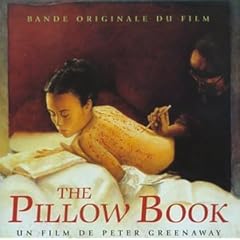
The film is by Peter Greenaway who is the director, book by Sei Shonagon and written by Peter Greenaway. The film which released on 08 November 1996 in UK was based on Drama, Romance, Nudity, Art, Fashion, Surrealism, Diary and Writing on the Body.

The film was about a young girl in Japan, whose father used to paint characters on her face and her aunt would read them out to her. The girl Nagiko grows up to be obsessed with writing on bodies, paper, books and having people writing on her.

The effects used in the film were very interesting and engaging. A scene would blend into another. Text would go around the screen every time a scene changed. The story was very fast and artistic in a sense that, the way the girl changed her mind about writing on people rather than having people to write on her body.


http://ecx.images-amazon.com/images/I/417KC3FCDXL._SL500_AA240_.jpg


http://www.axelmusic.com/resources/covers/back/043396287099.jpg

Web links to some mature sites:
http://www.destricted.com/
http://www.single-shot.co.uk/

Sunday, 5 October 2008

Otomo’s Akira

Twenty Years ago Katsuhiro Otomo’s Akira changed the perception of Japanese animation of the West’s.

It is said that Matrix was an inspiration of Akira. Quote from Empire Magazine: “No Akira, No Matrix. It’s that important”.

Akira project was based on 30 years from 2019, in which Tokyo was destroyed in World War III. The government captures a guy to do some tests on him, which gives him new powers.


http://uk.youtube.com/watch?v=nUziEwTCA3U&feature=related

http://uk.youtube.com/watch?v=qT_SLtKoeVY

Thursday, 2 October 2008

First Film

What was the First film called and how long was it?

The Lumiere Brother’s were one of the first ones to step into film world. They shot there first film using their own created combo movie camera and a projector. They used 35mm width of a film and a speed of 16 frames per second. Their first film was based on factory worker going to home after work on 22, March 1895.

Some of the films which were showing in 1895 are as following:

1. La Sortie des Ouviers de L'Usine Lumière à Lyon (1895) (Workers Leaving the Lumiere Factory) (46 seconds)

2. La Voltige (1895) (Horse Trick Riders) (46 seconds)

3. La Pêche aux Poissons Rouges (1895) (Fishing for Goldfish) (42 seconds)

4. Le Débarquement du Congrès de Photographie à Lyon (1895) (The Disembarkment of the Congress of Photographers in Lyon) (48 seconds)

5. Les Forgerons (1895) (Blacksmiths) (49 seconds)

6. Le Jardinier (l'Arroseur Arrosé) (The Gardener or The Sprinkler Sprinkled) (1895) (49 seconds)

7. Le Repas (de Bébé) (1895) (Baby's Meal) (41 seconds)

8. Le Saut à la Couverture (1895) (Jumping onto the Blanket) (41 seconds)

9. La Place des Cordeliers à Lyon (1895) (Cordeliers Square in Lyon) (44 seconds)

10. La Mer (Baignade en Mer) (1895) (Bathing in the Sea) (38 seconds)
The first feature length film was made in 1906 by Charles Tait, an Australian director and writer. The film lasted for 60-70 minutes. ‘The Story of the Kelly Gang’.

Films were made by the speed of 24 frames per second by the late 1920s.

Wednesday, 1 October 2008

Time Based Imaging

The module is based on moving images turned into a video. The module having three assignments, the first one is based on a 30sec video. The assignment requires the concept of Jim Campbell.


http://www.computergraphica.com/_sys/images/formula-for-computer-art.jpg

Input= ideas/theme/concept
Program= manipulation
Output=Final production

Looking into the history of video production which started off with Eadweard J.Muybridge (09 April 1830 – 08 May 1904). Eadweard was a photographer who was known for his multiple uses of cameras to capture motion.

In 1872 a businessman and a race-horse owner of California questioned: whether all four of a horse’s hooves left the ground at the same time during a gallop. Muybridge decided to answer the question scientifically.

In 1877 Muybridge photographed a horse running using a series of twenty-four cameras. He used a series of 12 stereoscopic cameras, 21 inches apart to cover the distance of 20 feet. Other 12 cameras were arranged parallel to the track. Pictures were taken at one thousandth of a second. A trip wire was attached to each camera shutter which was triggered by the horse’s hooves.


http://www.maritimeheritage.org/vips/images/muybridgeHorse.jpg

The series of photos are now known as ‘The Horse in Motion’.